
Featured Gardens
From Meavy Garden Society Members
Photos of members’ gardens and some of their thoughts on gardening
Brenda Burt’s Garden
“Angel’s Fishing Rods” (Dierama)
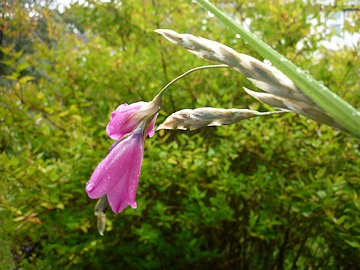
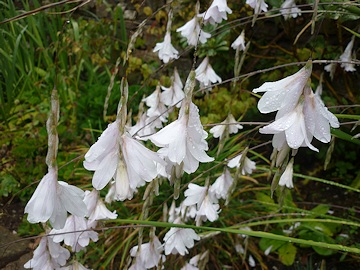
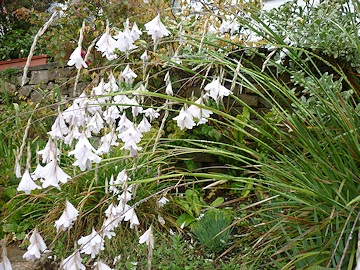
—
Janet Pattison’s Garden
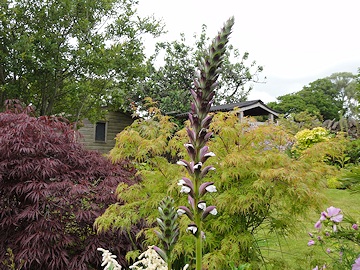
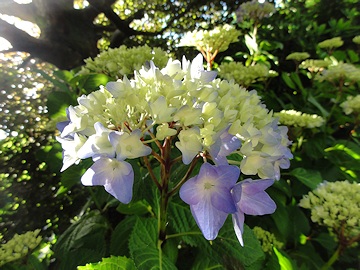
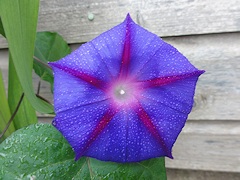
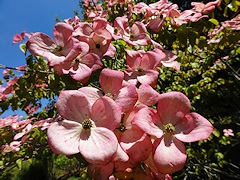
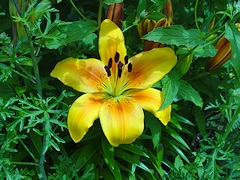
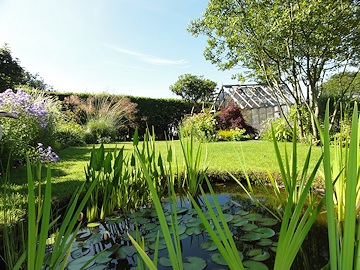
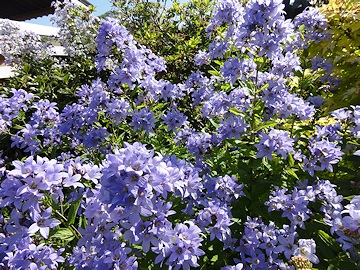
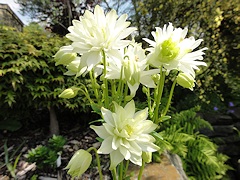
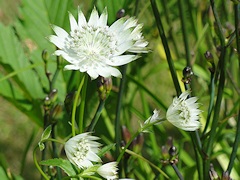
—
Martin and Brenda Burt’s Garden
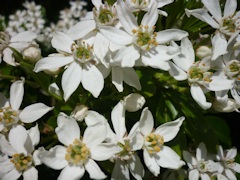
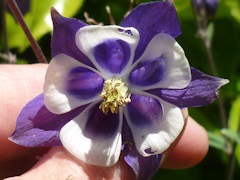
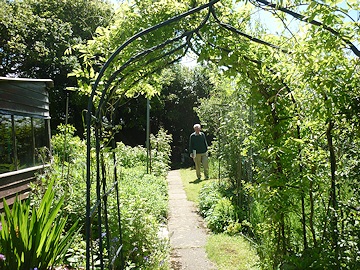
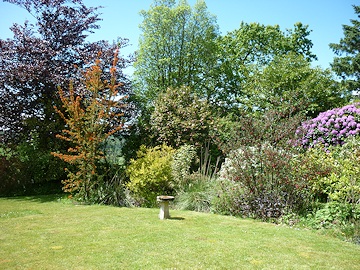
—
Joice Reith’s Garden
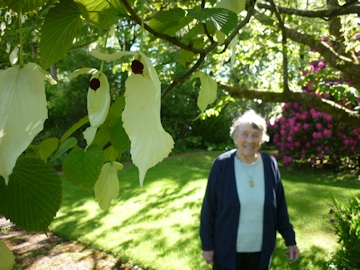
The first photo is Joice underneath her Handkerchief Tree (Davidia involucrata), which Joice says took 20 years to flower! The second one is the Handkerchief Tree.

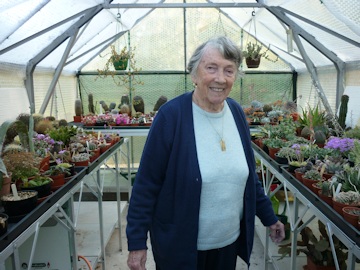
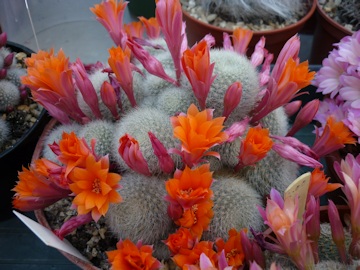
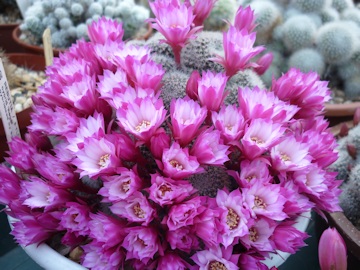
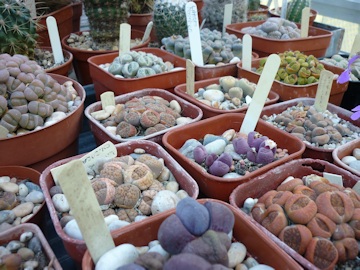
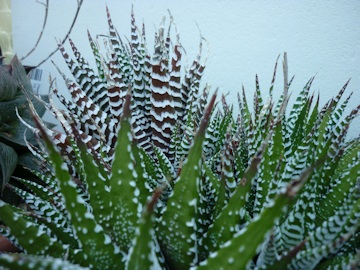
The next photo is Joice in her greenhouse with some of the many succulents and cacti that she grows. Joice and her late husband used to run a nursery, specializing in cacti and succulents and she has a wealth of knowledge about these plants. The 4th photo is of some of the succulents and cacti.

A few more photos from Joice Reith’s greenhouse of her succulents and cacti.
—
Lawrence and Stephen Pine’s Garden
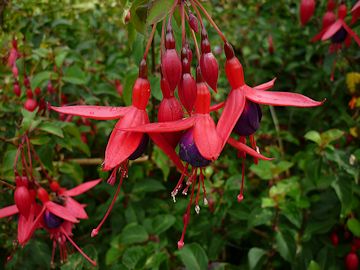
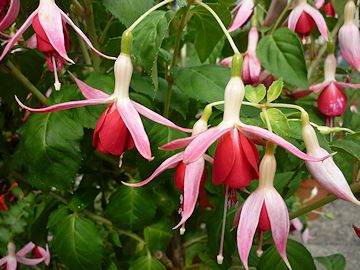 Fuchsias |
 |
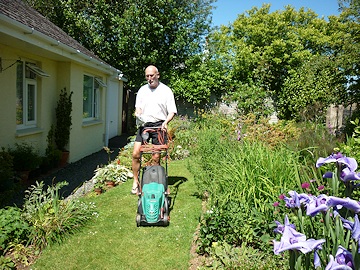 Lawrence in the garden |
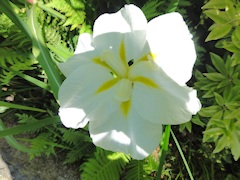
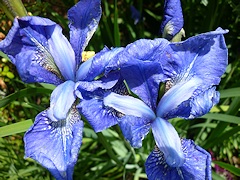
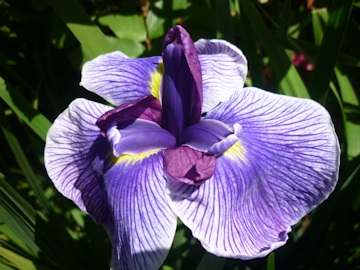 Iris ensata (Japanese water iris) |
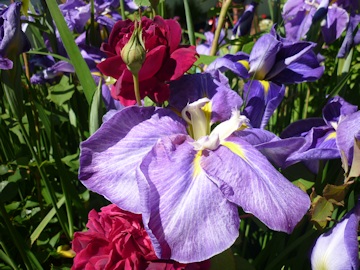 Rose William Shakespeare 2000 |
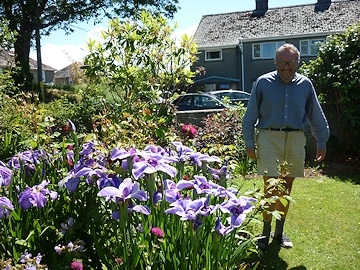 Stephen in the garden |
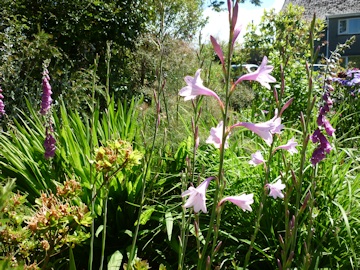 Watsonia |
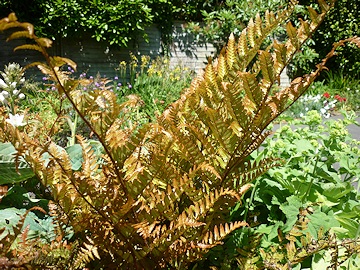 Japanese Shield Fern (Dryopteris erythrosora) |
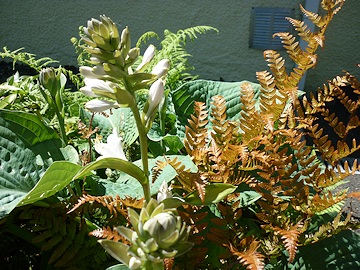 Hosta Borwick Beauty |
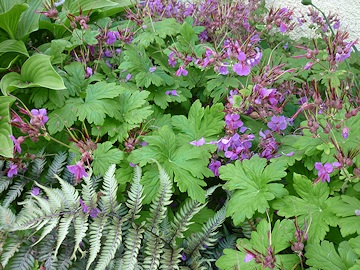
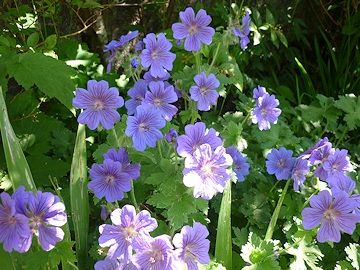 Geranium magnificum |
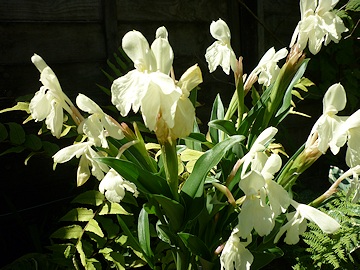 Roscoea cautleyoides |
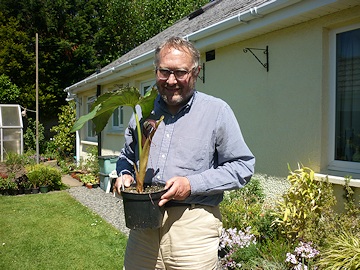 Stephen holding his Arisaema costatum |
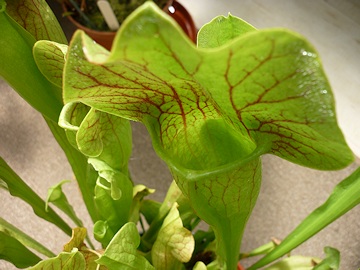 Sarracenia hybrid |
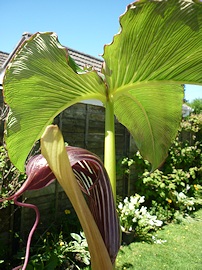 Arisaema costatum |
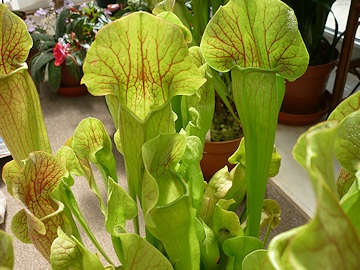 Sarracenia hybrid |
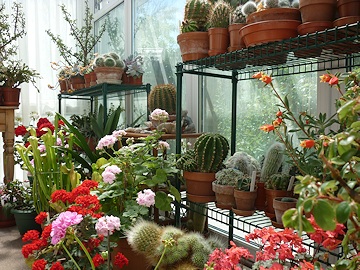 Stephen and Lawrence’s conservatory |
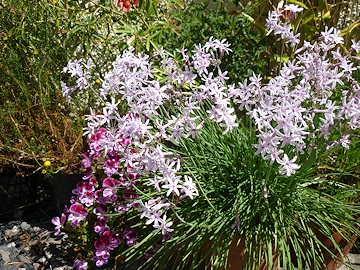 Tulbaghia Fairy Lights |
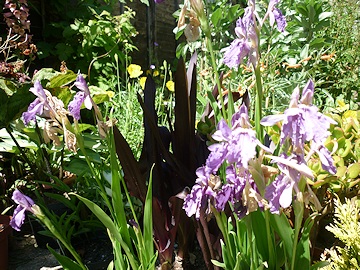 Roscoea cautleyoides purple form |
 |
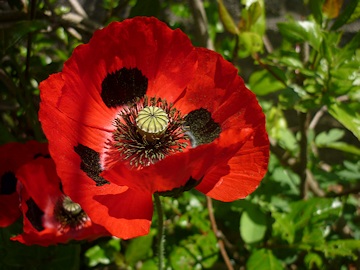 |
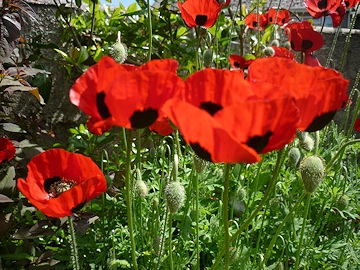
| Poppies | |
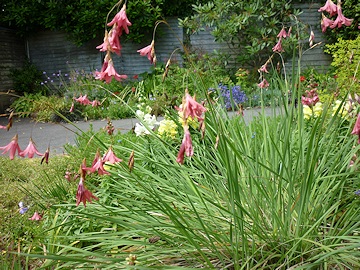 Angel’s Fishing Rods (Dierama) |
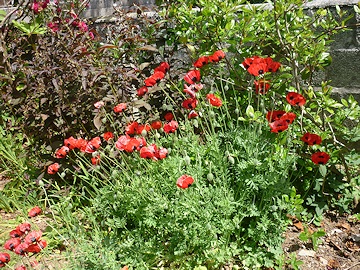 Poppies |
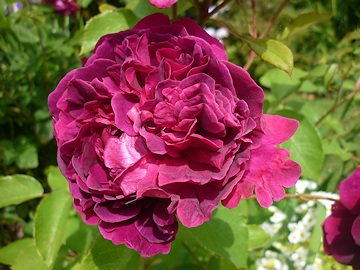 Rose |
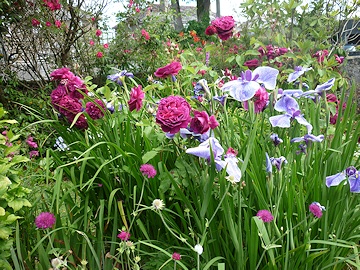 Rose and Japanese Iris |
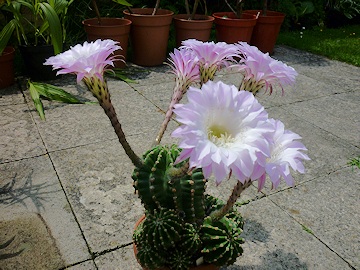
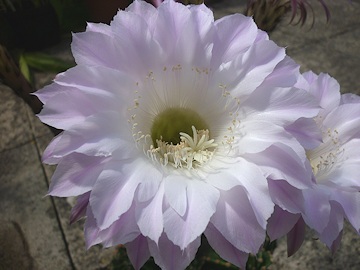
The two photos below are of Stephen’s Echinopsis, which he says only flowers for about 3 days.
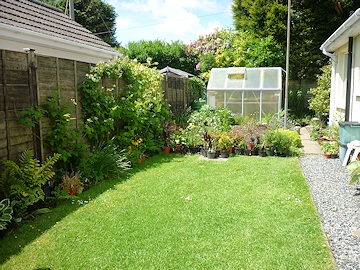
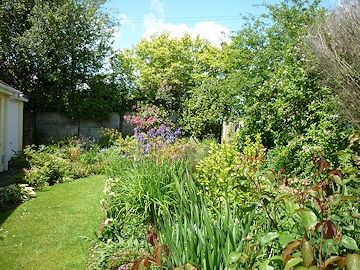
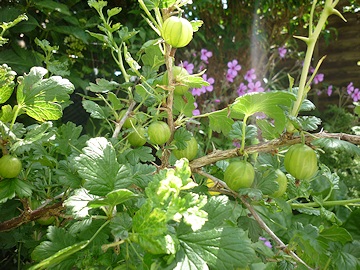
The remainder are general photos of their garden.
—
Martin’s Garden Musings
by Martin Burt
The importance of trees
If starting on a new or fresh garden, do concentrate on TREES. Look very hard at any you have now and imagine them in twenty years. Now think of the trees you want:- what, where, how big, what flowers, what fruit, which season, what soil, light, or moisture do they need? Otherwise you may be like us, twenty years we have lived in this house but the apple & plum trees are only two years old!
Moving the fruit cage
When moving the fruit cage I discarded the plastic twine netting, hateful stuff that catches on everything and was already ageing. I decided to use wire netting and choose something with about a one-inch mesh, often sold as ‘chicken wire’. Now I keep a peanut-feeder going all the year round inside the cage, which attracts the tits, robins, chaffinches, etc. which are insect-eaters small enough to get through the wire safely. while the fruit-eating blackbirds and thrushes cannot get in. My idea that while awaiting their turn on the peanuts the birds would check the bushes for bugs and caterpillars seems to work, as I find virtually none at harvest time. Don’t forget to bury or peg down the wire at the edges or the blackbirds may dig a way in. And add a dish of water as well.
The perils of ground elder
Are you one of the lucky few without ground elder (GE)? Then I beg you, be vigilant! The great asset of GE is that it is green. It blends in with almost anything else – until it has established enough roots to produce a flower spike. Then by golly, you are already well behind in the race. Once GE is established in any sizable area there seems little that will stop it.
Black plastic held down for many months will clear that area but all around the edges the massed troops will be waiting. Paraquat kills what it touches but there are so many overlapping roots. So. be vigilant! Check every plant that comes into your garden, whatever the source – neighbour, friend or shop – tease out the roots looking thoroughly for thin white roots or green root nodes, anything that is not attached to a root of the plant. Quarantine plants or anyone else’s compost. There is something to try.
Written for Meavy Garden Society by Martin Burt, April 2014